

What’s in Season in Los Angeles in November?
November is when the Los Angeles farmers market finally stops hedging.
October lets summer linger. November mostly does not. The tomatoes thin out, the last peppers make their exit and the tables fill with the things fall has been promising for weeks: soft, glossy Hachiya persimmons, the first mandarins of the year, Brussels sprouts still on the stalk and winter squash stacked high enough to block the view.
It is also the month most of us cook the most. Thanksgiving has a way of turning a casual market run into a mission.
Here is what you are likely to find at Los Angeles farmers markets this November, along with what is especially worth bringing home.
Market Mama brings that seasonal farmers market experience home with produce boxes and farm boxes delivered throughout Los Angeles.
November Produce at a Glance
Fruit
- Persimmons, both Fuyu and Hachiya
- Pomegranates
- Mandarins and satsumas
- Early navel oranges, toward the end of the month
- Meyer lemons
- Lemons and limes
- Apples
- Asian pears
- European pears
- Quince, depending on the farm
- Kiwi
- Guavas
- Pineapple guavas (feijoas), depending on the farm
- Dates
- Avocados
Vegetables
- Winter squash
- Pumpkins
- Sweet potatoes
- Brussels sprouts
- Broccoli
- Cauliflower and romanesco
- Cabbage
- Kale
- Chard
- Collards
- Lettuce, spinach and arugula
- Carrots
- Beets
- Turnips
- Radishes
- Celery root
- Fennel
- Leeks
- Onions
- Garlic
- Potatoes
- Mushrooms
Fresh Herbs
- Rosemary
- Sage
- Thyme
- Parsley
- Cilantro
- Dill
- Mint
- Chives
- Oregano
Availability changes from week to week. Heat, rainfall, location and the varieties grown by each farmer can move a harvest earlier or later.
That unpredictability is part of shopping from actual farms.
Persimmons Hit Their Peak
If October introduced persimmons, November is when they take over.
Fuyus, the squat, tomato-shaped ones, are at their sweetest and most abundant. Eat them firm and crisp, sliced like an apple, or let them soften a little on the counter for something closer to jam.
This is also the month the Hachiyas finally become worth the wait. The elongated, acorn-shaped variety needs to be fully, almost alarmingly soft before it is ready. Bite into one early and the tannins will make sure you never do it again. Wait, and the inside turns silky, deep orange and intensely sweet.
Spoon a ripe Hachiya straight from the skin, stir it into yogurt or oatmeal, or bake it into bread. Slice Fuyus into salads with pomegranate and something salty.
Our Fruit Box follows the harvest each week, which in November means persimmons are very likely to show up.
Citrus Season Begins
November is when Southern California citrus starts its long winter run.
The first mandarins and satsumas arrive, easy to peel and made for lunch boxes, coat pockets and the bowl by the front door. Meyer lemons appear, softer, sweeter and more floral than the everyday lemon. Toward the end of the month, the first navel oranges may join them.
Early-season citrus can be a little brighter and more tart than what you will taste in January. That is not a flaw. It is the season beginning.
Choose citrus that feels heavy for its size with fragrant, glossy skin. Keep it on the counter if you will eat it within a few days, or refrigerate it to make it last.
Pomegranates Are Still Going Strong
California pomegranate season carries well into November, and this is the month they earn a place on the holiday table.
Choose fruit that feels heavy for its size. Scuffs and scratches on the skin matter far less than the weight of what is inside.
Open them in a bowl of water to keep your kitchen intact. Scatter the arils over roasted squash, salads, yogurt or a cheese board. They make almost anything look like you tried harder than you did.
Apples, Pears and the Occasional Quince
Apples and pears settle into their most comfortable season in November.
Crisp apples for snacking sit beside softer, sweeter varieties made for baking. Asian pears stay juicy and dense. European pears ripen best on the counter, so buy them firm and wait until they give slightly near the stem.
If you see quince, take one home. It looks like a lumpy golden pear and smells like perfume, but it is far too hard and astringent to eat raw. Poach it or roast it slowly with honey and it turns soft, rosy and fragrant.
Dates Are a California Fall Fruit
Dates may feel like a pantry staple, but California grows them, and fall is when the harvest comes in.
Fresh-season dates can be softer, richer and more caramel-like than the ones that have spent months on a shelf. Stuff them, chop them into salads, blend them into smoothies or eat them with a piece of good cheese.
Winter Squash and Sweet Potatoes Run the Table
By November, winter squash is no longer decor. It is dinner.
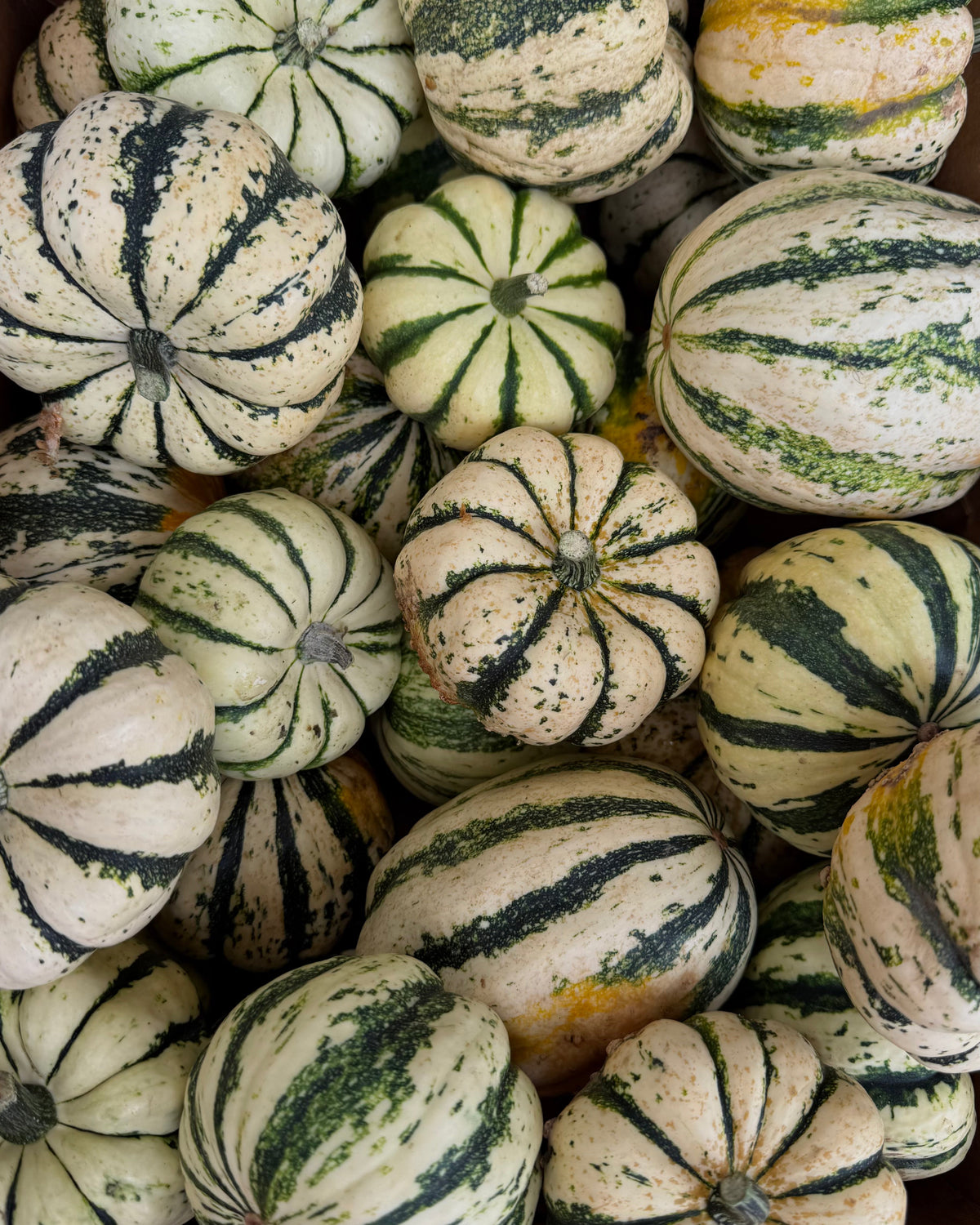
Butternut, kabocha, delicata, acorn and an assortment of gnarled heirloom varieties fill the market, alongside pumpkins meant for roasting rather than carving. Sweet potatoes come in orange, purple, pale yellow and Japanese varieties.
Both keep beautifully on the counter, which makes them two of the least stressful things you can buy at a market.
Roast squash in wedges until the edges darken. Purée it into soup. Mash sweet potatoes with butter and salt, or bake them whole and split them open with olive oil and herbs.
Brussels Sprouts, Broccoli and Cauliflower Come Into Their Own
Cool nights are good for brassicas, and November shows it.
Brussels sprouts sometimes arrive still clinging to the stalk. Broccoli and cauliflower look tighter and sweeter than they did in summer. You may find romanesco, with its spiraling green peaks, and dense heads of cabbage.
Roast Brussels sprouts hot enough to char the outer leaves. Shave them raw into a salad with lemon and parmesan. Roast cauliflower whole. Slaw the cabbage.
Greens Taste Better Now
Cooler weather changes leafy greens.
Kale, chard and collards become more tender and noticeably sweeter as temperatures drop. Lettuces, spinach and arugula settle back into their best season after a long, hot summer.
This is the month when salads stop depending on tomatoes and start leaning on bitter greens, citrus, pomegranate and toasted nuts.
Roots Worth Digging Into
Carrots, beets, turnips and radishes are all very much at home in November.
You may also find celery root, the knobby, unglamorous vegetable that tastes like a cross between celery and parsley. Peel it, roast it or purée it with potatoes for a mash that will have people asking what you did.
Leeks and fennel join the pile, both ideal for soups, braises and anything that spends a long time in the oven.
The Hardy Herbs Take Over
Basil has mostly handed things off.
November belongs to rosemary, sage and thyme, the herbs that hold up to roasting, braising and hours in the oven. Parsley, cilantro, dill and chives keep things bright alongside them.
Fry sage leaves in butter. Tuck rosemary under a roasting chicken. Strip thyme over squash. If you need help keeping a bunch fresh all week, we wrote a whole guide on how to store fresh herbs.
A Farmers Market Thanksgiving
November is the one month a year when many of us cook for a crowd, which makes it the best time to let the market do the heavy lifting.
A Thanksgiving table built almost entirely from Southern California farms could look like this:
- Roasted winter squash with sage and pomegranate
- Brussels sprouts charred in a hot oven
- Mashed potatoes, or potatoes and celery root together
- Sweet potatoes with butter and a little salt
- A bitter green salad with persimmon, citrus and toasted nuts
- Stuffing with leeks, celery, fresh thyme and rosemary
- Pies and baking made with farm-fresh eggs, local apples, pears or pumpkin
Order early in the week of Thanksgiving if you can. Market tables and delivery routes both get busy.
What Is Leaving the Market?
November is when summer finally lets go.
Tomatoes, peppers and eggplant become scarce and then disappear for the year. Grapes finish. Figs are done. Melons and the last stone fruit are gone. Basil fades as the nights get colder.
As always, not everything ends on the same day. One farm may still be picking something another farm finished weeks ago.
Farms operate according to plants, weather and growing conditions, not calendar notifications.
When a farmer says something is the last of the season, believe them.
What Is Available Nearly Year-Round in Los Angeles?
Southern California rarely gives us clean seasonal edges.
Depending on the farm and growing region, Los Angeles markets may continue offering avocados, lemons, limes, carrots, beets, lettuces, leafy greens, potatoes, onions, mushrooms, herbs and other familiar staples through much of the year.
Year-round availability does not make seasonality irrelevant. Varieties change, farms shift growing regions and the same vegetable can taste completely different in November than it did in July.
You can meet some of the Southern California farmers and growers Market Mama sources from here.
What We Would Bring Home in November
Were we building a November farmers market haul purely around what tastes best right now, we would start with:
- A bag of Fuyu persimmons, plus a Hachiya or two to ripen on the counter
- The first mandarins of the season
- A couple of heavy pomegranates
- Meyer lemons
- Apples or pears, ideally more than one variety
- A winter squash we have never cooked before
- Brussels sprouts, on the stalk if we can find them
- A bunch of kale or chard
- Celery root and leeks for something slow-cooked
- Sage and rosemary
- A dozen farm eggs for whatever gets baked
That is enough to cover breakfast, salads, soup, a roast or two and the citrus bowl on the counter that somehow empties itself.
Let the Market Decide
A seasonal shopping list is a guide, not a contract.
The best thing at a Los Angeles farmers market in November may be a perfectly soft Hachiya you have been waiting on for weeks. It may be the first satsuma of the year, peeled and eaten before you reach the car. Or it may be a squash so strange looking that you have to ask what it is.
Pay attention to what is abundant.
Ask what was picked most recently.
Ask what is just starting.
Ask what the farmer is cooking for Thanksgiving.
That is usually where the good stuff is.
Market Mama sources from Southern California farmers and growers based on what is fresh, beautiful and worth bringing home that week.
Our boxes change because the market does.
Read more
October in Los Angeles is where summer and fall meet. Persimmons, pomegranates, apples, pears and winter squash arrive while tomatoes, peppers and grapes are still hanging on. Here’s what’s in seas...
Yes, you can eat the wax. Here is how to eat and serve honeycomb, why raw local honey from Bill’s Bees tastes different, and how to store it.



Leave a comment
All comments are moderated before being published.
This site is protected by hCaptcha and the hCaptcha Privacy Policy and Terms of Service apply.