

What’s in Season in Los Angeles in October?
October is when fall finally earns some space at the Los Angeles farmers market.
Not necessarily in the weather. Los Angeles has never been particularly interested in sweater season arriving on schedule. But the tables know what month it is.
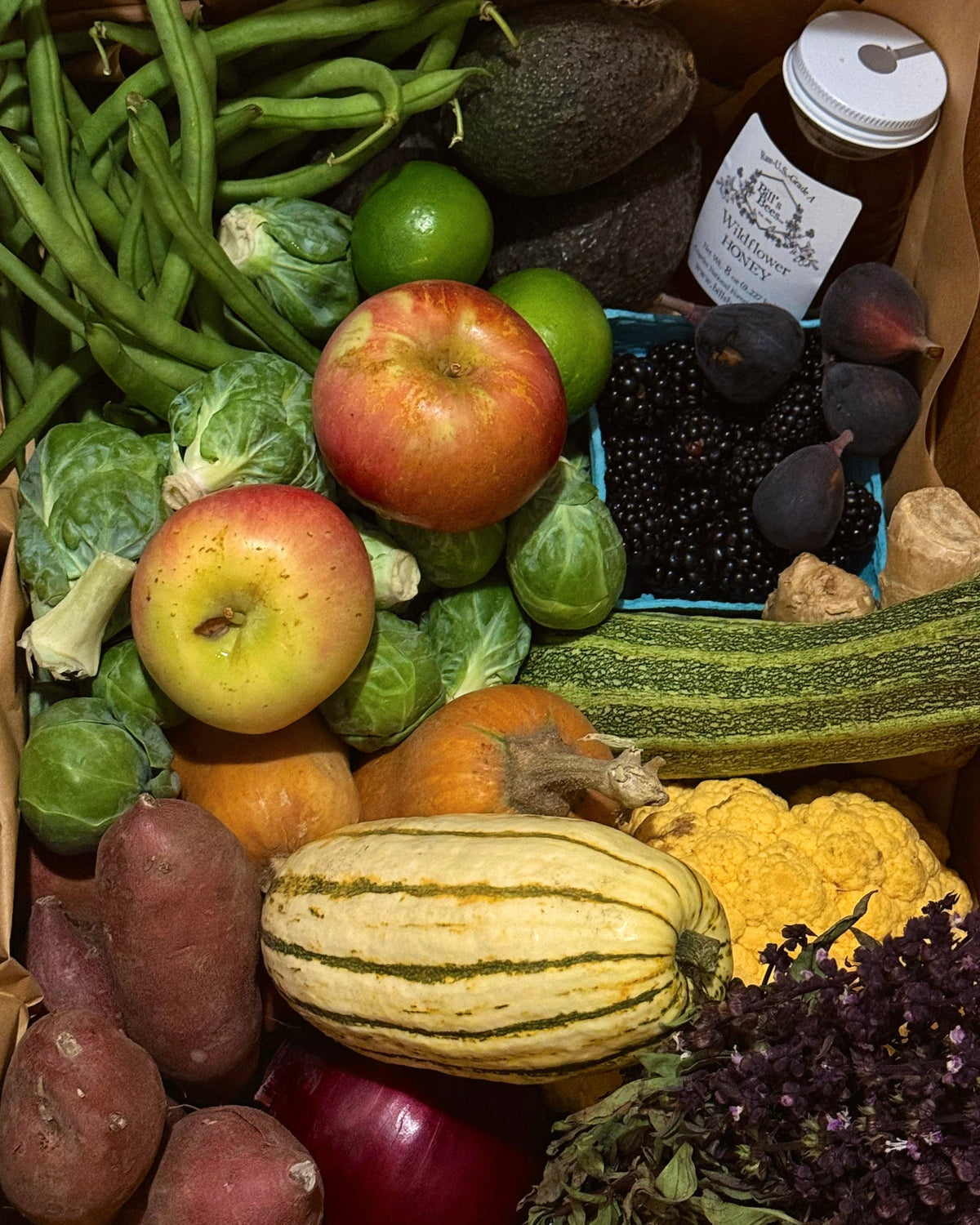
Persimmons are turning orange, pomegranates are properly underway, apples and pears are piling up, and winter squash no longer feels like a preview. Meanwhile, tomatoes, peppers and grapes are still hanging on just long enough to make October one of those very California months when two seasons seem to exist at once.
Here is what you are likely to find at Los Angeles farmers markets this October, along with what is especially worth bringing home.
Market Mama brings that seasonal farmers market experience home with produce boxes and farm boxes delivered throughout Los Angeles.
october produce at a glance
fruit
-
Persimmons
-
Pomegranates
-
Apples
-
Asian pears
-
European pears
-
Grapes
-
Figs, depending on the farm
-
Late season plums and other stone fruit, in increasingly limited quantities
-
Melons
-
Avocados
-
Valencia oranges
-
Lemons and limes
-
Guavas
-
Kiwi
-
Early mandarins and other citrus, depending on the farm
vegetables
-
Winter squash
-
Pumpkins
-
Sweet potatoes
-
Tomatoes
-
Peppers, sweet and hot
-
Eggplant
-
Tomatillos
-
Broccoli
-
Cauliflower
-
Carrots
-
Beets
-
Green beans
-
Zucchini and summer squash
-
Lettuce and leafy greens
-
Kale
-
Chard
-
Fennel
-
Onions
-
Garlic
-
Potatoes
fresh herbs
-
Basil, while it lasts
-
Cilantro
-
Parsley
-
Dill
-
Mint
-
Oregano
-
Thyme
-
Rosemary
-
Sage
Availability changes from week to week. Heat, rainfall, location and the varieties grown by each farmer can move a harvest earlier or later.
That unpredictability is part of shopping from actual farms.
persimmons have arrived
If September gives us the occasional first persimmon, October is when they start to become difficult to ignore.
Fuyu persimmons are the squat, tomato shaped ones that can be eaten while still firm. Slice them like an apple and they are crisp, sweet and one of the easiest fruits to keep around for snacking.
Hachiya persimmons are the more elongated, acorn shaped variety. They need patience. Eat one before it is fully soft and the tannins will make your mouth feel like you have somehow forgotten how saliva works. Wait until the fruit feels almost impossibly soft and the flesh becomes silky and intensely sweet.
Add sliced Fuyus to salads, eat them with yogurt, tuck them onto a cheese board or simply leave a bowl of them on the counter because October persimmons are good enough to justify buying more than you planned.
If fruit is the part of the market you look forward to most, our Fruit Box follows the harvest each week and changes according to what our farmers are picking.
pomegranates are now in full swing
The few pomegranates that started appearing in September become much harder to miss in October.
California's fall pomegranate season is properly underway now, and this is when baskets of heavy, deeply colored fruit begin taking up serious space at market stands.
Choose pomegranates that feel heavy for their size. The skin does not need to be flawless, and surface scratches generally matter far less than the weight of the fruit inside.
Open them in a bowl of water if you want to avoid turning your kitchen into evidence. The arils sink, the pale membrane floats, and suddenly the whole process becomes considerably less dramatic.
Scatter them over salads, spoon them onto yogurt, add them to roasted squash or eat them straight from the bowl.
apples and pears settle in for fall
October is a very good month to remember that an apple is not just an apple.
Farm stands begin filling out with different varieties, each with its own texture, sweetness and reason for existing. Some are crisp and sharp enough for salads. Others are sweeter and better eaten straight from the bag. Some are destined for pie whether they know it yet or not.
Pears are equally varied. Bartletts begin giving way to other fall varieties, while Asian pears remain crisp, fragrant and almost impossibly juicy.
For apples, look for firm fruit without soft spots. Pears require a little more patience. Many varieties are picked firm and finish ripening off the tree, so leave them on the counter until they give slightly near the stem.
Keep a few for eating and cook the rest. Apples and pears both become considerably more interesting with butter, cinnamon and a little heat.
winter squash takes over
The winter squash that quietly started appearing in September now belongs here.
October farmers markets can bring pumpkins, delicata, butternut, acorn, kabocha and any number of deeply ridged, strangely shaped varieties that make grocery store squash look remarkably boring.
The good news is that you do not need to know what every one of them is before buying it.
Ask the farmer.
Some varieties are particularly sweet. Some have dry, almost chestnut like flesh. Some are better for soup, others for roasting, and some simply need to be cut in half, rubbed with olive oil and left alone in a hot oven until the edges caramelize.
Winter squash also keeps exceptionally well, which means this is one of the rare market purchases that does not immediately begin counting down the hours until you deal with it.
sweet potatoes finally feel appropriate
Sweet potatoes may have started appearing earlier, but October is when they finally make sense.
They are one of the easiest things to bring home without a plan. Roast them whole, cube them alongside winter squash, mash them with butter and salt, or cut them into wedges and let the edges get properly dark in the oven.
Different farms may offer different skin and flesh colors, from the familiar orange varieties to pale, purple or Japanese sweet potatoes.
Buy whichever looks good. October is not the month for discriminating against a potato based on color.
tomatoes refuse to acknowledge fall
This is Los Angeles, after all.
Even while persimmons and pumpkins announce the arrival of fall, tomatoes can still be sitting a few feet away acting like nothing has changed.
October tomatoes are less predictable than August tomatoes, but warm Southern California weather can keep plants producing well into fall. Heirlooms may become less abundant and varieties may change as particular plantings finish.
If they look good, buy them.
Keep them on the counter and let the fruit tell you what to do. A very good tomato still needs little more than salt and olive oil. A slightly less perfect October tomato can become sauce, soup or something roasted slowly until nobody cares what month it came from.
peppers and eggplant are still hanging on
Peppers and eggplant are often among summer's more persistent residents.
Warm days can keep both crops going into October, particularly across Southern California's growing regions. You may still find sweet peppers, hot chiles and glossy eggplants sharing tables with squash and pomegranates.
Roast the peppers until their skins blister. Char eggplant until the inside nearly collapses. Make salsa. Make soup. Put both on a sheet pan with olive oil and stop overthinking dinner.
Their time is coming to an end, which is reason enough to enjoy them while they are still here.
grapes get one more good month
California grape season does not disappear just because September ended.
October can still bring excellent table grapes, although varieties and availability begin changing as the season progresses.
Look for firm fruit attached to healthy looking stems and do not worry about the pale dusty coating you sometimes see on the skin. That natural bloom helps protect the grape.
Keep them cold for snacking, freeze them, roast them with herbs for a cheese board, or accept that the bag you bought for the week will probably be gone by tomorrow afternoon.
broccoli, cauliflower and leafy greens start looking better
October also begins moving the market back toward vegetables that prefer cooler conditions.
Broccoli and cauliflower become increasingly at home on the table, while kale, chard, lettuces and other greens begin settling back into their cooler season rhythm.
Southern California's climate means many of these vegetables never disappear completely, but seasonality still changes their quality and abundance.
This is the point in the year when salads can start becoming less tomato dependent and roasted vegetables begin making considerably more sense.
basil begins handing things over
October can still have basil, particularly while Southern California stays warm, but its uninterrupted summer reign is nearing its end.
This is the month to use it generously when you see a beautiful bunch.
Make pesto. Tear it over tomatoes. Put far too much into a salad.
At the same time, rosemary, thyme and sage suddenly feel more at home next to the squash, sweet potatoes and cooler weather vegetables arriving around them.
The herbs change with the table.
what is leaving the market?
October is another month of overlap, but summer cannot negotiate forever.
Peaches and nectarines are essentially finishing. Plums and pluots become increasingly difficult to find. Figs may linger at certain farms, but their season is winding down. Melons begin thinning out. Tomatoes, summer squash, eggplant and peppers can continue while the weather cooperates, though availability becomes less predictable.
Basil will eventually follow.
That does not mean every summer crop disappears on October 1. A Southern California farm may still be harvesting something weeks after another farm has finished.
Farms operate according to plants, weather and growing conditions, not calendar notifications.
When a farmer says something is the last pick of the season, consider that your warning.
what is available nearly year round in los angeles?
One of the strange luxuries of eating in Southern California is that our seasonal calendar rarely has perfectly clean edges.
Depending on the farm and growing region, Los Angeles markets may continue offering avocados, lemons, limes, carrots, beets, lettuce, leafy greens, potatoes, onions, herbs and other familiar staples through much of the year.
Some crops move between regions. Others have varieties with different harvest windows. Some simply grow remarkably well in our climate.
Year round availability does not make seasonality irrelevant.
It makes paying attention more interesting.
The farms and varieties change even when the name written on the market sign does not.
You can meet some of the Southern California farmers and growers Market Mama sources from here.
what we would bring home in october
Were we building an October farmers market haul purely around what tastes best right now, we would start with:
-
A bag of Fuyu persimmons
-
Several heavy pomegranates
-
A few different apple varieties
-
Asian pears
-
Grapes while they are still good
-
One winter squash we have never cooked before
-
Sweet potatoes
-
Tomatoes, if the farmer says they are still worth buying
-
A handful of peppers
-
Something green and leafy
-
Sage or rosemary for whatever ends up in the oven
That is enough to cover breakfast, salads, roasted vegetables, a few easy dinners and the bowl of fruit on the counter that somehow disappears without anyone admitting to eating it.
let the market decide
A seasonal shopping list is a guide, not a contract.
The best thing at a Los Angeles farmers market in October may be the first perfect persimmon you have waited all year for. It may be a pomegranate so heavy you immediately put three more in the bag. Or it may be a tomato that has absolutely no business still being that good this far into fall.
Pay attention to what is abundant.
Ask what was picked most recently.
Ask what is almost finished.
Ask what the farmer is taking home.
That is usually where the good stuff is.
Market Mama sources from Southern California farmers and growers based on what is fresh, beautiful and worth bringing home that week.
Our boxes change because the market does.



Leave a comment
All comments are moderated before being published.
This site is protected by hCaptcha and the hCaptcha Privacy Policy and Terms of Service apply.