

What’s in Season in Los Angeles in July?
July is when the farmers market starts showing off.
Tables fill with peaches soft enough to perfume the drive home, tomatoes in every possible shape, bins of corn still wrapped in green husks and melons that actually smell like something before you cut them open.
This is high summer in Southern California. Spring’s cherries, peas and apricots begin making their exit while tomatoes, peppers, eggplant, figs and melons settle in for the season.
Here is what you are likely to find at Los Angeles farmers markets this July, along with what is especially worth bringing home.
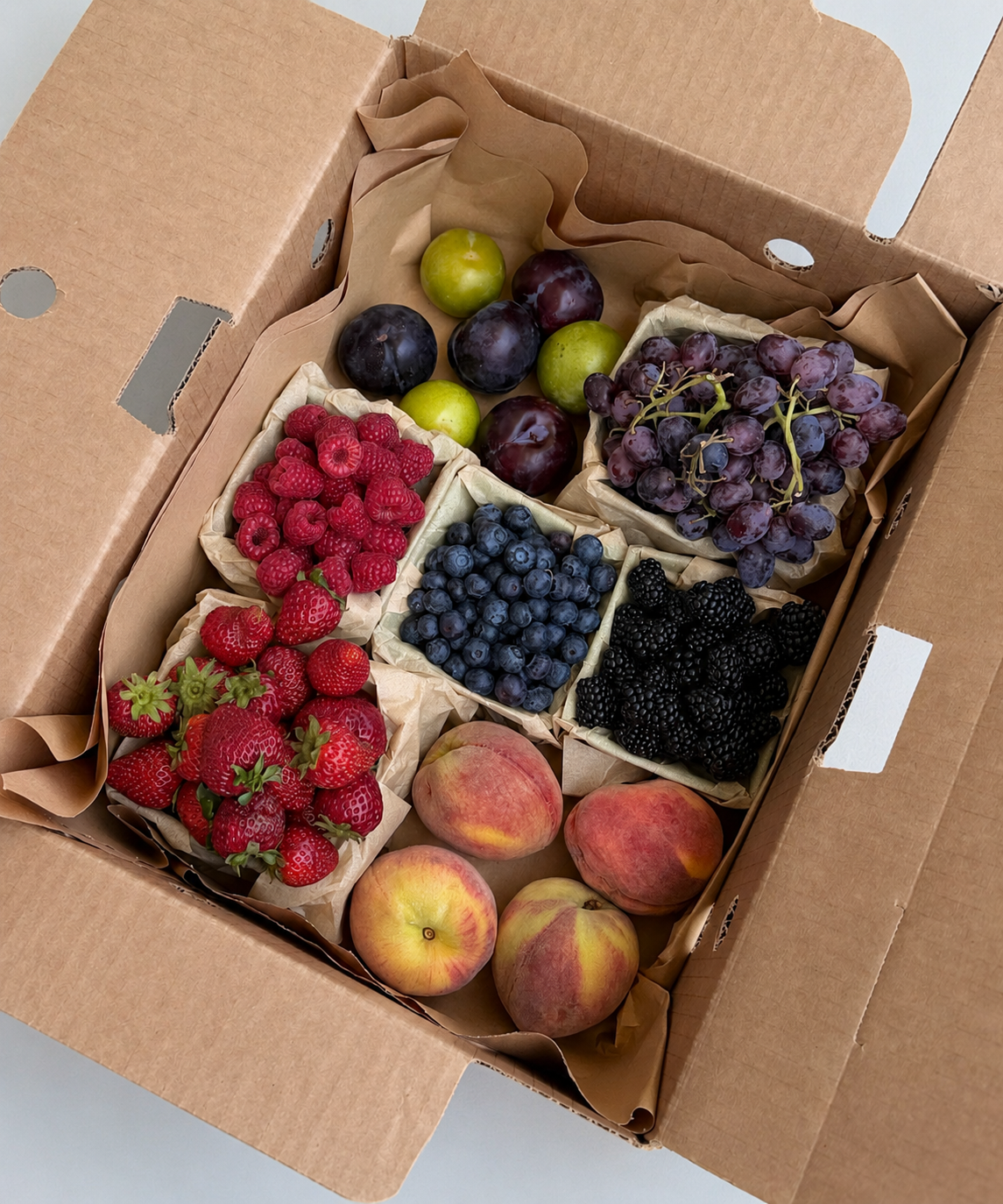
Market Mama brings that seasonal farmers market experience home with produce boxes, farm boxes and fruit boxes delivered throughout Los Angeles.
July Produce at a Glance
Fruit
- Peaches
- Nectarines
- Plums and pluots
- Figs
- Watermelon
- Cantaloupe and specialty melons
- Strawberries
- Blackberries and raspberries
- Grapes
- Avocados
- Valencia oranges
- Lemons and limes
- Early pears
- Early-season apples
- Late cherries and apricots, depending on the farm
Vegetables
- Tomatoes
- Sweet corn
- Cucumbers
- Summer squash
- Zucchini
- Eggplant
- Sweet peppers
- Chile peppers
- Green beans
- Okra
- Tomatillos
- Carrots
- Beets
- Onions
- Garlic
- Lettuce and leafy greens
Fresh Herbs
- Basil
- Dill
- Cilantro
- ParsleyMint
- Chives
- Oregano
- Thyme
- Rosemary
- Sage
Availability changes from week to week. Heat, rainfall, location and the varieties grown by each farmer can shift a harvest earlier or later.
That unpredictability is part of shopping from actual farms.
Stone Fruit Is the Main Event
July is one of the best months of the year for California stone fruit.
Peaches, nectarines, plums and pluots begin taking over entire market stands. You may find yellow peaches with a fuller acidity, floral white peaches, deeply colored plums and pluots ranging from honey-sweet to sharp and jammy.
This is the time to choose with your nose instead of your eyes. A ripe peach should smell like a peach before you bite into it. Minor marks and uneven coloring are not necessarily problems. Fruit grown for flavor does not always arrive looking as uniform as fruit selected for a supermarket display.
Eat the ripest pieces over the sink. Slice firmer fruit into salads, tuck it beside soft cheese or cook it down with a little lemon. Anything becoming too soft can be frozen for smoothies, roasted or turned into a quick compote.
During peak stone-fruit season, our Fruit Box follows what looks best at the market that week, from peaches and nectarines to plums, pluots, figs and melons.
Tomatoes Finally Taste Like Tomatoes
By July, tomatoes begin earning the amount of space they occupy at the market.
Expect cherry tomatoes, slicing tomatoes, Roma-style varieties and heirlooms in shades of red, green, gold, purple and nearly black. Some are sweet. Others are bright and acidic. The best ones need very little beyond salt and olive oil.
Tomatoes are one of the clearest examples of why seasonality matters. A supermarket tomato can look convincing in the middle of winter. A July market tomato smells green at the stem, feels heavy in the hand and leaves juice running across the cutting board.
Keep good tomatoes on the counter rather than automatically putting them in the refrigerator. Then use them quickly.
Make tomato toast. Add them to eggs. Tear them over bread with cucumbers and herbs. Eat the cherry tomatoes while standing in front of the open container.
Melon Season Has Arrived
July brings watermelon, cantaloupe, honeydew and the smaller specialty melons that make farmers-market shopping more interesting.
Look beyond the perfectly round supermarket standards. California growers bring varieties with pale green flesh, deep orange centers, striped skins and floral flavors that can taste completely different from one another.
A ripe melon should feel heavy for its size and smell fragrant near the blossom end. Once cut, keep it cold and use it within a few days.
Melon is obviously good on its own, but it also belongs with lime, chile, mint, basil, cucumbers, salty cheese and prosciutto for those who eat it.
Figs Begin Their Brief, Beautiful Run
Fresh figs are one of July’s best reasons to visit a farmers market early.
Depending on the farm and variety, you may see green, amber, brown or dark purple fruit. A ripe fig should be soft without leaking and is usually best eaten very soon after bringing it home.
They bruise easily and do not appreciate ambitious plans.
Eat them with yogurt, spoon them over toast, add them to a salad or serve them with cheese and honey. When figs are properly ripe, doing less is usually the correct decision.
Corn, Cucumbers and Summer Squash
This is the section of the market that makes dinner easy.
Sweet corn can be boiled, grilled, shaved raw into salads or cut from the cob and folded into eggs, pasta and grain bowls. Cucumbers bring the necessary crunch to hot LA days. Summer squash can be grilled, roasted, sautéed, shaved thin or grated into fritters.
You may also see squash blossoms attached to very young squash or sold in bunches of their own. They are delicate, highly perishable and worth buying when you know you will cook them that day.
This entire group works well with fresh basil, dill, mint, parsley, lemon and good olive oil.
Eggplant, Peppers and Tomatillos
As the weather heats up, the market gets louder in color.
Eggplants arrive in glossy purple, lavender, white, green and striped varieties. Peppers range from sweet and crisp to genuinely hot. Tomatillos begin filling their papery husks and are ready for salsa, sauces, roasting and braising.
These crops love summer heat. July is when they begin appearing with greater variety, and their season continues well beyond this month.
Roast eggplant until it collapses. Char peppers until the skins blister. Blend roasted tomatillos with onion, cilantro, lime and chile. These are vegetables that become more themselves with a little fire.
What Is Leaving the Market?
Part of eating seasonally is noticing what is on its way out.
Cherries are usually nearing the end of their California season by July. Apricots can still appear early in the month, but their window is much shorter than that of peaches or plums. Blueberries also begin tapering after their spring and early-summer peak.
This does not mean they disappear on July 1. Farms operate on growing conditions, not calendar notifications.
When a grower tells you it is the final week for something you love, believe them.
What Is Available Nearly Year-Round in Los Angeles?
Southern California does not follow the same seasonal calendar as colder parts of the country.
Depending on the growing region and current conditions, Los Angeles markets may continue offering strawberries, avocados, citrus, carrots, beets, lettuces, leafy greens, radishes, mushrooms, herbs and other familiar staples through much of the year.
Year-round availability does not mean those foods taste identical every month. Varieties change. Farms change growing regions. Heat affects greens and herbs. Citrus moves through different types.
There is still a season within the season.
What We Would Bring Home in July
Were we building a July farmers-market haul purely around what tastes best right now, we would start with:
- A few varieties of peaches, nectarines or plums
- Fragrant melon
- Heirloom tomatoes
- Sweet corn
- Crisp cucumbers
- Summer squash
- Eggplant or peppers
- A generous bunch of basil
- Figs whenever they look irresistible
That is enough to cover breakfast, salads, quick dinners, snacks and the kind of counter fruit that disappears without anyone remembering who finished it.
Let the Market Decide
A seasonal shopping list is a guide, not a contract.
The best thing at a Los Angeles farmers market in July may be a peach you planned to buy. It may also be a striped eggplant, a melon you have never heard of or a tomato a farmer cuts open and salts for you on the spot.
Pay attention to what is abundant. Ask what was picked most recently. Ask what the farmer is eating at home.
That is usually where the good stuff is.
Market Mama sources from Southern California farmers and growers based on what is fresh, beautiful and worth bringing home that week. Our boxes change because the market does.





Leave a comment
All comments are moderated before being published.
This site is protected by hCaptcha and the hCaptcha Privacy Policy and Terms of Service apply.