
Pasture-Raised vs. Free-Range vs. Organic Eggs: What the Labels Actually Mean
Buying eggs at the grocery store has quietly become a reading comprehension test.
Cage-free. Free-range. Pasture-raised. Organic. Natural. Vegetarian-fed. Omega-3. Some cartons carry so many claims and illustrations of sunny barns that it is hard to tell what any of it actually means for the hen who laid the egg.
Here is a plain-language guide to the most common egg labels in the United States, what they generally promise, what they do not, and why the simplest way around the whole puzzle is knowing the farm.
Why Egg Labels Are So Confusing
Some egg labels are defined by the USDA. Some are defined by independent certification programs. Some are mostly marketing.
The federal definitions that do exist tend to be loose. They describe the general idea of how hens are housed without always specifying how much space they have, how long they spend outdoors or what “outdoors” looks like. That leaves a lot of room between the picture on the carton and the reality in the barn.
Third-party certifications, such as Certified Humane and Animal Welfare Approved, fill in some of those gaps by setting their own specific standards for space, outdoor access and care, and by auditing the farms that use their labels. When you see one of those seals, the claim on the carton has more behind it.
Label rules and certification standards also change over time, so treat what follows as a general guide rather than a legal reference.
What the Egg Labels Mean
Cage-Free
Cage-free means the hens are not kept in cages. It does not mean they go outside. Many cage-free hens live indoors in large barns, where they can walk, perch and nest but may never see daylight.
It is an improvement over conventional cage systems. It is not the open field the word tends to suggest.
Free-Range
Free-range generally means hens have some access to the outdoors. The catch is that the federal definition does not say much about how large that outdoor area is, what it is made of or how much time the birds actually spend there. In some cases, “access” can mean a door to a small outdoor space that relatively few birds use.
Pasture-Raised
Pasture-raised suggests hens spend meaningful time outdoors on living pasture, foraging for plants, seeds and insects. However, the term is not tightly defined at the federal level on its own.
This is where third-party certification matters most. Certified Humane’s pasture-raised standard, for example, is well known for requiring 108 square feet of outdoor space per bird, with pasture rotated so the ground can recover. Without a certification or a farm you know, “pasture-raised” is a promise you are taking on trust.
Organic
USDA Organic eggs come from hens fed organic feed, grown without synthetic pesticides or fertilizers, and raised without antibiotics. Organic hens are generally not kept in cages and must have access to the outdoors, though the details of that outdoor access have long been debated.
Organic tells you a great deal about the feed. It tells you less about how much time hens spend on actual pasture.
Natural
“Natural” on an egg carton means very little. Eggs are a single, unprocessed ingredient, so the word does not distinguish one carton from another in any meaningful way. Consider it decorative.
Vegetarian-Fed
Vegetarian-fed means the hens’ feed contains no animal products. That sounds wholesome, but chickens are not naturally vegetarian. Given the chance, they enthusiastically eat insects, worms and anything else interesting they find in the dirt.
A vegetarian-fed label often means the hens are housed indoors, where their diet is entirely controlled. A hen foraging on pasture is, almost by definition, not vegetarian.
Omega-3
Omega-3 eggs come from hens whose feed has been supplemented with ingredients such as flaxseed or algae. The label speaks to the feed, not to how the hens are raised. An omega-3 egg can come from a hen that has never been outside.
Why Yolk Color Varies
Crack eggs from a few different sources and the yolks can range from pale lemon to deep orange.
That color comes mostly from what the hen eats. Natural pigments in greens, plants and certain feed ingredients pass into the yolk. Hens foraging on fresh plants often lay eggs with deeper colored yolks, while feed formulas can push yolk color lighter or darker depending on what goes into them. Some producers even add plant-based pigments to feed specifically to make yolks look more orange.
Which means yolk color reflects diet, but it is not a scorecard. The color of a yolk alone does not tell you everything about how a hen was raised or how good the egg will taste.
It is also one reason eggs from a small farm can look a little different from week to week. Hens on pasture eat according to what is growing.
The Easier Answer: Know the Farm
Every label above is an attempt to answer a few basic questions. Where do the hens live? What do they eat? Do they actually go outside?
When you buy from a small farm you know, you can simply ask. There is no need to decode a carton when the farmer can tell you.
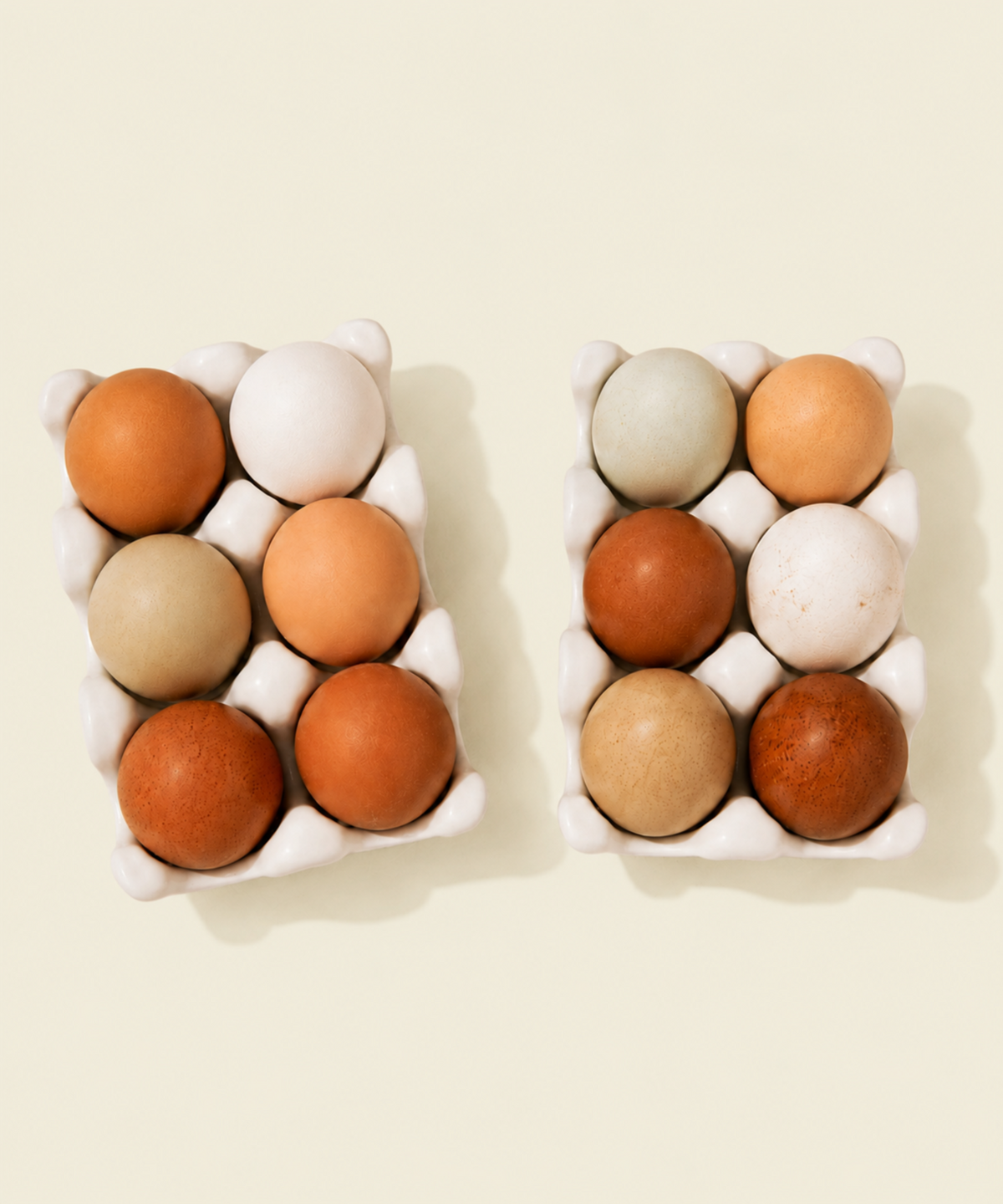
That is how we approach our farm fresh eggs. Our Local Heirloom Eggs come from pasture-raised hens fed a soy-free, corn-free diet. Each carton holds a mix of heirloom colors, which makes opening the box a little more fun than it has any right to be.
Every egg arrives unwashed, straight from the farm, with its natural bloom intact. The bloom is a thin protective coating the hen applies as the egg is laid, and leaving it in place is why our eggs can sit on the counter for two to three weeks.
Most supermarket eggs in the US are washed before packing, which removes that bloom, and that is why those eggs need to stay in the refrigerator. For the full story, read Do Farm Fresh Eggs Need to Be Refrigerated?
Egg Label FAQ
Is pasture-raised better than free-range?
Generally, pasture-raised implies more meaningful outdoor time on living pasture than free-range does. But neither label is tightly defined on its own, so a third-party certification or a farm you trust tells you more than the word itself.
Are organic eggs pasture-raised?
Not necessarily. Organic focuses mainly on feed and farming inputs. Organic hens must have outdoor access, but that is not the same as living on pasture.
Does a darker yolk mean a healthier egg?
Not on its own. Yolk color mainly reflects what the hen ate, and feed can be adjusted to change it. It is a clue about diet, not a complete picture.
Why are Market Mama’s eggs different colors?
Shell color is determined by the breed of hen, and our Local Heirloom Eggs arrive in a mix of heirloom colors. The color of the shell does not change what is inside.
Skip the Carton Math
Egg labels are trying to describe something that is much easier to understand in person: happy hens, good feed and a farmer willing to tell you how it all works.
We would rather just bring you the eggs.
Read more
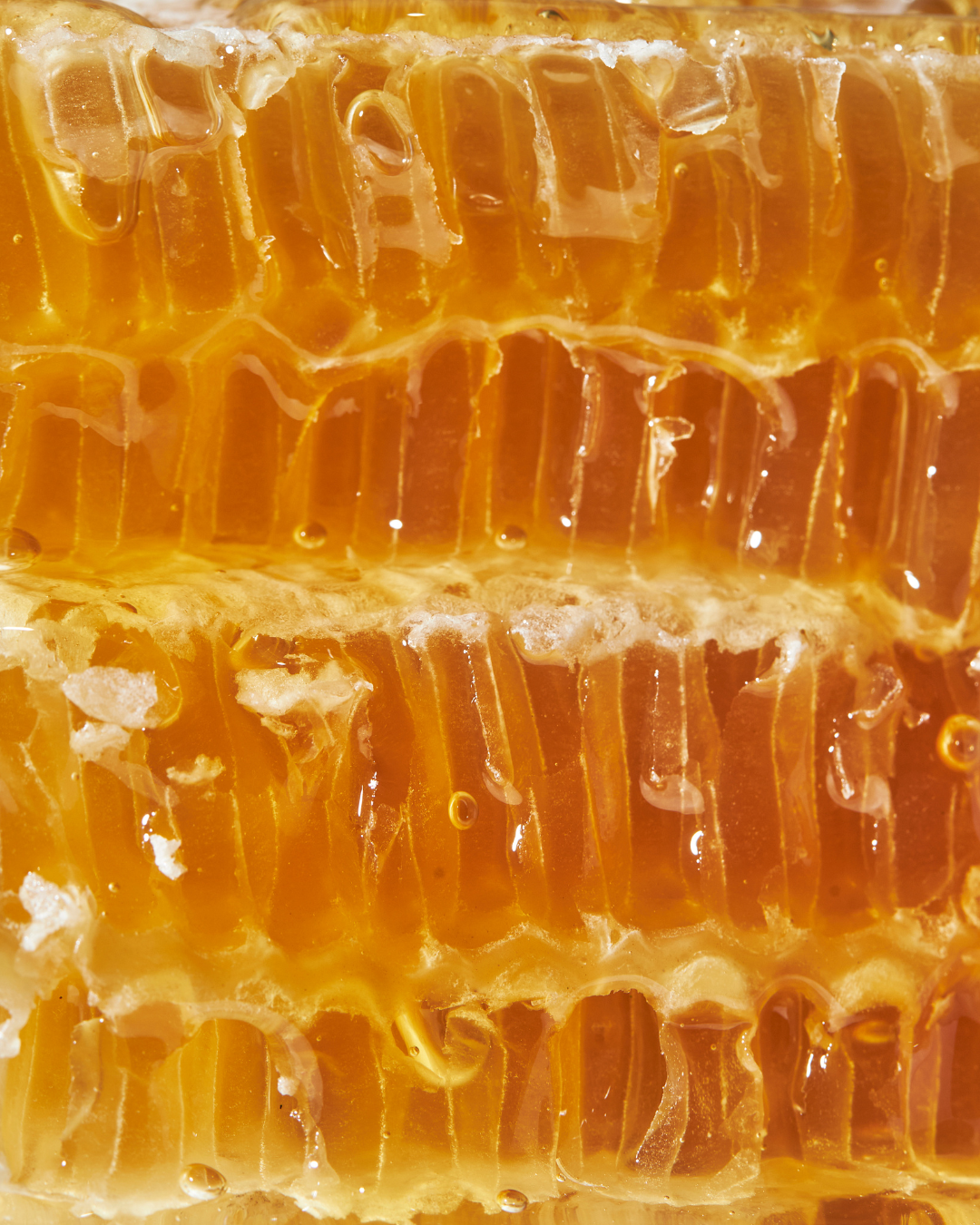
Yes, you can eat the wax. Here is how to eat and serve honeycomb, why raw local honey from Bill’s Bees tastes different, and how to store it.
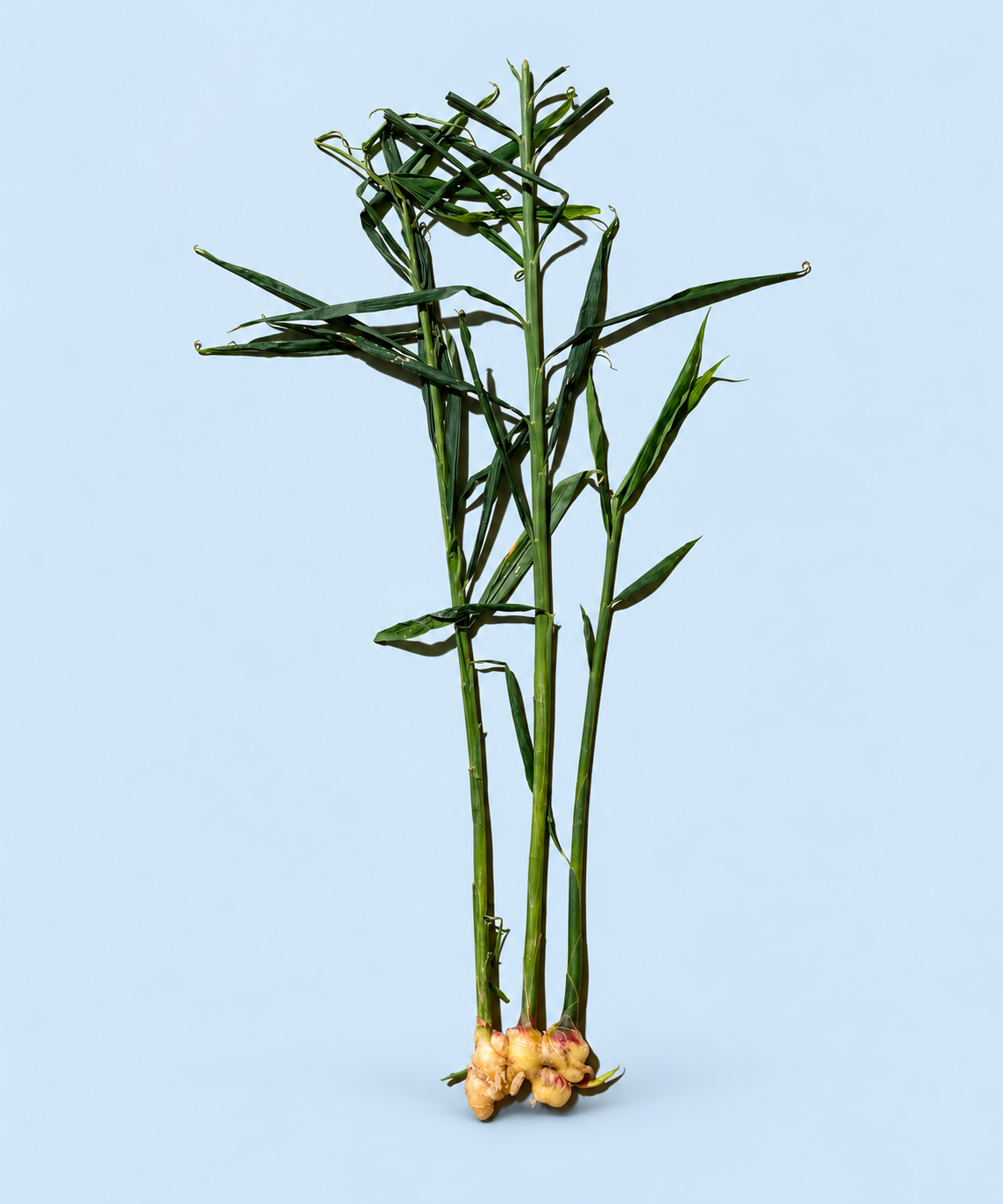
Young ginger has thin skin, pink tips and green stalks still attached. Here is how it differs from mature ginger, how to use the root, stalks and leaves, and how to store it.



Leave a comment
All comments are moderated before being published.
This site is protected by hCaptcha and the hCaptcha Privacy Policy and Terms of Service apply.